
Muddy Leg Care


What our customers say


Keen to know more?

If you’ve owned horses through a wet winter, you’ve probably come across the dreaded mud fever. As if riding in the rain and dealing with muddy, soggy fields isn’t enough, skin issues can feel like the final straw.
But what actually causes mud fever, and what can we do about it? Let’s break it down in simple terms.
What Is Mud Fever in Horses?
Mud fever, also known as pastern dermatitis or greasy heel, is a skin condition that typically affects the lower legs. When the skin is constantly wet or muddy, bacteria and fungi can invade, causing scabs, hair loss, and soreness. Horses with white legs or sensitive skin are often more prone to this condition.
What causes Mud Fever?
The ultimate culprits are bacteria, fungi, and mites that thrive in damp environments and invade weakened skin. But some skin is more vulnerable than others, with risk factors including:
- Prolonged exposure to wet and muddy fields – constant moisture leads to cracked and softened skin.
- White legs and pink skin – horses with lighter skin are more prone to mud fever and other horse leg skin infections.
- Cold weather – reduces circulation and slows healing, making infections worse.
- Cuts or abrasions – even small nicks provide an entry point for bacteria.
Myth Buster- 'Mud fever only happens in wet weather'.
Reality: While wet and muddy conditions increase the risk, mud fever can also develop in seemingly dry conditions if there’s dirt, manure, or damp bedding that irritates the horse’s skin. Poor hygiene, weak immunity, and minor skin injuries can all contribute, even when it hasn’t rained recently.
Symptoms of Mud Fever
The symptoms of mud fever can range from mild scabbing to painful swelling that affects movement. Early detection is key.
Look for:
- Lumps and bumps (tiny scabs) on the legs – usually starting around the pasterns or fetlocks. Run your hand up and down the leg to feel them.
- Hair loss and raw skin – as the infection develops, the hair often falls out, leaving sore patches.
- Heat and swelling – inflamed skin may feel hot to the touch when you run your hand over the leg, and the legs can swell.
- Pain and sensitivity – your horse may react when you touch the affected area.
- Lameness – in severe cases, mud fever can make horses reluctant to move, raising concerns about whether mud fever causes lameness in horses. (answer: yes, it can).

Guarding Against Mud Fever – What We Do at Biteback
Prevention is better than cure. We follow this regime on our herds of field-dwellers:
- Check legs daily, paying close attention to pasterns and fetlocks. Early detection is key. Catching scabs, hair loss, or swelling early allows for prompt defensive action.
- Rotate paddocks, provide dry turnout areas, or use a stable during very wet conditions to reduce constant contact with mud.
- Very gentle cleaning: Avoid washing and brushing of vulnerable skin. Instead, let the mud dry and remove it with fingers or a rubber curry comb. Avoid washing the legs: the wet and cold conditions will only exacerbate the issue. Instead, gently cleanse the area with a mild antiseptic lotion such as Quick-Silver. Spray onto the affected area, gently massage it into the skin, and wipe away any excess with a clean towel.
- Dry, dry, dry – Moisture is the enemy here, so always gently pat dry with a clean towel, and puff on a drying powder, massaging it into the skin. Flowers and Zinc Antiseptic Powder will absorb excess moisture, and it is naturally antiseptic and antibacterial. A dry surface will also help any creams adhere to the skin.
- Soften scabs – Use a soothing cream to help any scabs come away naturally. Mudbar Plus is moisturising and the Ionic Silver will support the skin's natural healing.
- Protect the skin – Apply a waterproof barrier cream to keep mud and moisture out. Mudbar Plus cream forms an antiseptic shield, blocking the entry of microbes and other environmental irritants. It is highly water-resistant, providing long-lasting support for the skin's natural barrier.
- Maintain strong overall skin health – A balanced diet rich in vitamins and minerals supports the skin’s natural defenses. Healthy skin is less prone to wet-weather horse skin problems.
- Call your vet if you are worried – If it seems to be taking hold, antibiotics may be needed.
Tips for Faster Healing
- Keep your horse stabled or on hard standing for a period after applying products, to allow them to absorb into the skin.
- Check legs daily for new scabs or irritation.
- Avoid turnout in muddy paddocks until there is visible improvement (not always possible depending on your set-up)
By combining these mud fever prevention strategies, you can significantly reduce the risk and keep your horse comfortable and active—even in the wettest seasons.
Managing a Full-Blown Infection – What We Do at Biteback
"My mare came back from an equine maternity yard with the start of Mud Fever. I think there were 2 reasons why she'd developed it: Firstly, she lost fitness and condition because of foaling and was more susceptible to infections, and secondly, she was in a much smaller space so did a lot less walking around and her legs had started to fill." - Kath Shaw, Biteback founder
A severe infection will typically appear as widespread scabby lesions clearly visible around the joint, often accompanied by bloody inflammation between the scabs. The affected legs will be tender to the touch and may swell with fluid above the joints. The horse is also likely to show signs of discomfort or altered behaviour.
If the scabs are thick and firmly attached, wrap the joint overnight with cling film and a layer of vet wrap after completing the preventative steps outlined above. When possible, turn the horse out to help reduce swelling. The following morning, remove the cling film, repeat the preventative care, and leave the legs unwrapped during the day. Continue re-wrapping overnight until most of the hard, crusted scabs have softened and fallen away.
If there is no noticeable improvement within 3–4 days, contact your veterinarian. Your horse may require an oral antibiotic and/or a short course of steroids to encourage healing. Always seek veterinary advice if you are unsure about the condition or its management.
Mud Fever FAQs
1. What causes mud fever in horses?
Bacteria and fungi invade weakened skin, usually after prolonged wet and muddy conditions.
2. Is mud fever contagious?
Not directly, but bacteria can be present in shared muddy areas. Good hygiene helps reduce risk.
3. Can mud fever cause lameness?
Yes. Severe cases can make horses uncomfortable or reluctant to move.
4. What is the best way to treat mud fever?
Gently clean, dry, and apply a barrier or medicated cream. Call a vet for persistent or severe cases.
5. How can I prevent mud fever in winter?
Check legs daily, reduce mud exposure if it’s possible, use barrier products if horse is prone.
6. Do horses with white legs get mud fever more often?
Yes, lighter skin is thinner and more susceptible.
7. Can I ride my horse with mud fever?
Light riding may be okay for mild cases, but avoid riding if there’s swelling, pain, or lameness.
8. Should I wash the mud off the legs?
No, avoid washing as the cold and excess moisture can make matters worse.
Final Thoughts
Mud fever is a common skin condition that can cause discomfort and complications if left to its own devices. Recognising the early symptoms—such as redness, scabs, or irritation on the horse’s lower legs—is key to effective management. Combining regular prevention strategies, like keeping the legs clean and dry, maintaining proper grooming, and managing wet environments, with timely treatment can help your horse stay healthy and comfortable. By staying vigilant and proactive, horse owners can significantly reduce the risk of mud fever and ensure their animals remain happy, active, and free from this troublesome condition.

Disclaimer: These are the views of Biteback and are not an alternative to veterinary advice

We all sigh with relief when the midges are on their way out and we can relax our midge management regime for a few months.
But for those of us who keep our horses and ponies out all or most of the time (as we know it’s what they thrive on), there are plenty more challenges awaiting with the cold damp winter and early spring weather.
Quite a few equines are prone to skin breakouts in damp weather since the microbes which are mainly responsible (bacteria and fungi) thrive in moist conditions. It rarely gets cold enough for long enough to kill off the microbes in the immediate environment.
Some types of horses are more prone to particular conditions; for example, cobs and heavy horses are much more prone to excess keratin production (leading to thickened, crusted scale on the legs) than most. Other factors include age and health of the immune system. Conditions such as Cushings Syndrome and Equine Metabolic Syndrome can cause sufferers to be more prone to skin disturbances and it is always worth testing for these conditions if your horse has repeated skin flare-ups and is in its late teens or older.

Mallenders
How can you help prevent these conditions?
Some horses need to wear outdoor rugs throughout the cold weather as they are clipped to avoid excess sweating during exercise. Unfortunately, no two days running have the same weather in our climate and most people can’t keep changing rugs continuously, so they must choose something that covers all contingencies. This is usually a heavyweight waterproof rug which suits extreme winter conditions but can be too much on milder days and can overheat the horse, causing it to sweat.
Sweat under a rug can be a major source of discomfort and can provide perfect conditions for bacteria and fungi to thrive. My suggestion here would be to remove the rug every day at some point and lightly brush the coat with a stiff dandy brush or rubber curry comb to lift the hair and aerate the skin and, ideally, massage in a drying powder such as Flowers and Zinc all along the back and where the coat is sweaty. I find a light sprinkling of Flowers and Zinc in susceptible areas massaged in with fingers keeps skin dry and healthy through winter.
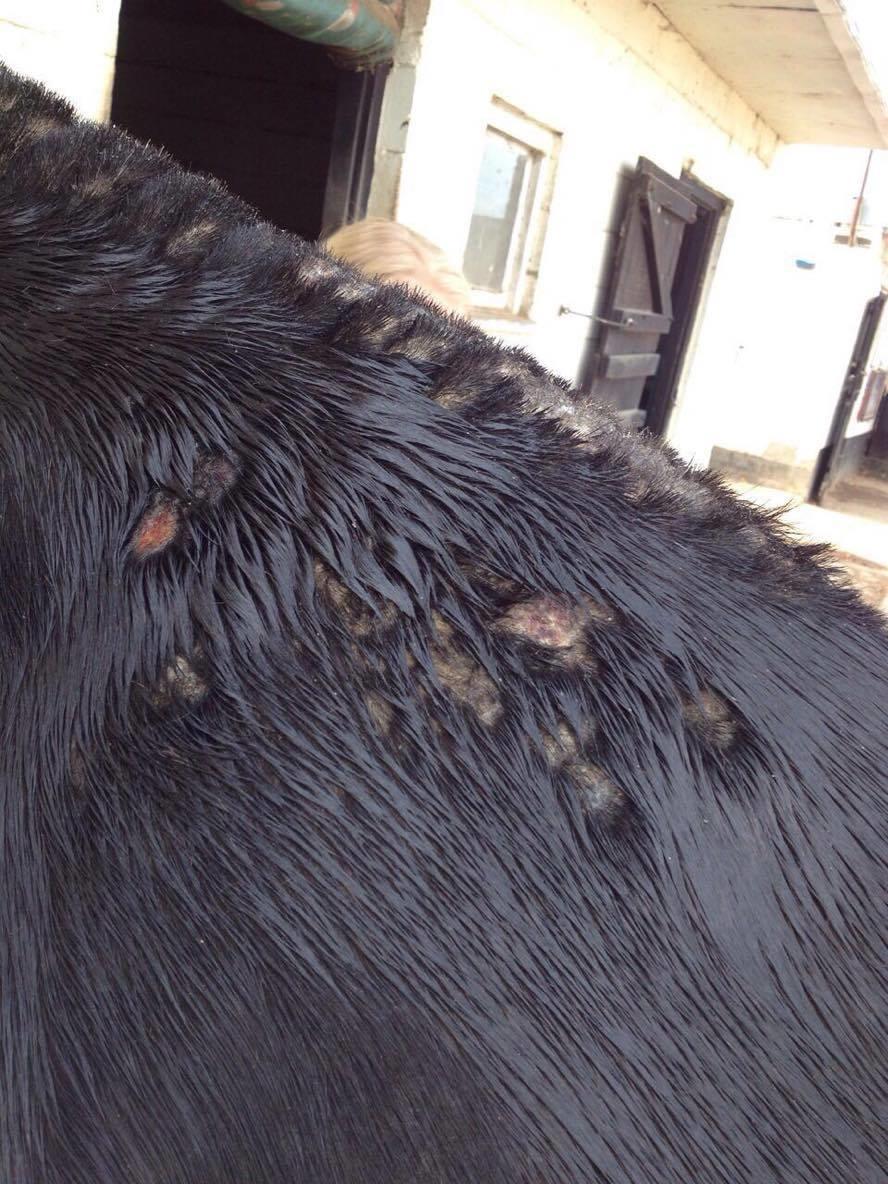
Skin issues can often be exacerbated by rugs
This powder is also a useful preventative for mud-related skin issues – massaging it into the skin (after first rinsing off mud if necessary and drying with a towel) cleans, dries and helps keep the lower legs in good condition. In addition, to help prevent occurrence, I would avoid covering up the legs in turnout socks or boots and refrain from brushing lower legs in case the waterproof outer mantle of the skin is broken, allowing microbes in.
For horses that are turned out in full winter coat with available natural or built shelter from the worst weather, no rug should be necessary unless the horse is old or infirm. However, the back should be checked regularly for any sign of scabby or rough patches. If the horse gets soaked through and is unable to dry off for days, the hair can flatten and trap moisture, creating a warm damp haven for microbes. Ideally, a winter coat should be standing erect to trap air – if flattened it doesn’t do a proper job of keeping the horse warm. Therefore, a light rug can make the horse lose heat rather than keep it warm, as it flattens the natural insulation. If your horse has a very thick mane, make a habit of lifting it and aerating the hair underneath with a dandy or rubber curry comb. I have previously waxed lyrical about the use of rugs, as people who follow me will testify - do have a read of my blog on the pros and cons of them.
How can you nip these skin conditions in the bud, once they've started?
You need to know what to look and feel for to start with - often a series of small bumps you can feel on the surface of the skin, frequently on lower legs and especially in the pastern area so it’s a good idea to run your fingers lightly over this region every day in the winter months. You may also feel an increased warmth and it may be sensitive to touch.

Another thing to check for is rough scaly bald patches, usually along the back and shoulders, in the forelock and under the mane. They are usually visible but it’s good practice to check over the coat with your fingers regularly to feel for cracks and warmth.
Personally, I tend to address most winter skin conditions with the same 3 step regime: Cleanse – Dry – Turnaround:
1. Cleanse:
I don’t tend to cold hose in winter unless there’s so much mud that you can’t see what you’re doing. I prefer to cleanse with something I can quickly dry off with clean cotton wool or towel and frequently use either Quick-silver spray or Sweatbuster, depending on how large the area is I am cleaning. If it’s the whole lower leg for example, I would probably use Sweatbuster as it’s cheaper and goes further. With a very large area such as all along the top line, I might use plain table salt dissolved in water (2 tablespoonfuls to a half bucket of warm water) and a clean sponge. With a smaller area, I will use Quick-Silver lotion as its slickness makes it easy to massage into the skin while spraying. Both products are antiseptic cleansers, sweeping away microbes and effectively sterilising the area.
2. Dry:
I carefully use a clean towel if I’m drying a large area making sure I don’t rub hard enough to disturb the fragile skin. Otherwise, I use cotton wool to press the area firmly but gently to remove most of the moisture. It’s important not to rub off any scabs before the skin has healed underneath, otherwise it’s open to further infection.
I then sprinkle a drying powder onto the area and gently massage in with my fingers until the skin feels dry. I don’t worry if the hair is still damp – it’s the skin I’m concerned with. I use Flowers and Zinc Drying Powder which has sulphur to disinfect, zinc oxide to soothe and talc to absorb moisture.
3. Turnaround:
The turnaround applications I most often use is Sweet Relief Silver cream or Mudbar Plus cream which I spread thinly with fingers over the target area. These are very useful creams containing simple off-the-shelf ingredients that together work quickly and thoroughly to turn things round. The silver ions are naturally antiseptic and antibacterial and the other ingredients soothe, soften and protect the skin while it heals. Mudbar Plus also contains a UV filter which is handy, as these kind of skin conditions are often triggered by UV light.
How long do I keep up the regime?
This of course depends on the severity of the case. I need to stress here that if a condition fails to stabilise within 3-4 days or fails to show signs of improvement within a week, then a vet should be consulted.
Having said that, I have found that most winter skin issues clearly benefit from the grooming regime described above. With our horses, I would usually keep up the full 3 steps for at least 3 days, then carry on with the drying powder and cream only for another 4 days or so, leaving out the cleansing stage. It is perfectly safe to keep up the drying and cream stages for another week until dry crusts have cleared, and growth of new skin/hair is evident. After that, I would keep using the drying powder in damp conditions and keep a close eye on all susceptible areas as described above.
© Kath Shaw